
Player count · Craft & Build
Factorio
Player count and genre ranking
Factorio has a reported 24-hour peak of 18,128 concurrent players.
Coverage: Steam only. Ranked #5 in the tracked Craft & Build lineup.
Source: Steam Charts · Retrieved Tue, 17 Nov 2026 23:26:52 GMT
Concurrent players are not daily active users. No historical trend is available yet. Sources & methodology
Dated AI analysis — not a hands-on review
Factorio centers on the logic of automation, turning simple production steps into sprawling industrial networks while hostile creatures complicate expansion and resource use.
TheGoatBoard AI Editorial · · Not a hands-on review
Steam store description retrieved at review generation. AI interpretation, not a hands-on test. Game details can change after this review's date.
A factory built from dependencies
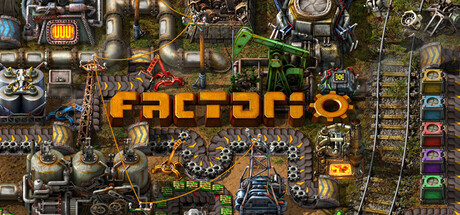
Factorio asks you to turn resources into increasingly complex products through machines, transport systems, and automated production. Its two-dimensional presentation keeps the relationship between those pieces legible, even as factories become extensive. Belts, inserters, and later railway networks make moving materials as important as manufacturing them. Progress repeatedly exposes a new bottleneck: solving shortages in one component can uncover insufficient supply elsewhere. The result is a building game driven less by individual structures than by how reliably the entire system operates.
The pleasure of understanding a system
The appeal lies in discovering that a messy collection of machines can become a coherent, repeatable design. Layouts can be refined, copied with blueprints, and connected into larger networks, making learned solutions useful beyond a single production line. Players who enjoy diagnosing causes rather than merely reacting to symptoms have plenty to engage with here. Its visual restraint also serves the task: the factory is primarily a working diagram, and successful construction means being able to understand and extend that diagram.
Expansion brings complications
Factorio's hostile creatures prevent expansion from being purely a logistics exercise. Pollution can provoke attacks, and protecting production adds another demand on materials and planning. That tension gives industrial growth consequences, but it may distract players who primarily want peaceful optimization; world settings can adjust the challenge. Complexity is another meaningful barrier. A functioning early factory does not guarantee a scalable one, and reorganizing transport or production can become a substantial project rather than a quick correction to a small mistake.
Strengths
- Interlocking transport and production systems
- Blueprints support repeatable factory designs
Consider before playing
- Scaling exposes earlier layout weaknesses
- Defense competes with production priorities
The verdict
Factorio suits players who want building to mean designing a reliable system rather than decorating a settlement. Its tightly connected logistics offer substantial room for improvement and experimentation. The main decision is whether recurring bottlenecks and defensive responsibilities sound like stimulating problems or unwanted friction in an otherwise satisfying automation sandbox.